The way we prevent HIV has changed significantly over the past few decades. Alongside condoms, HIV testing and effective HIV treatment, medications such as PrEP and PEP provide additional ways to prevent HIV.
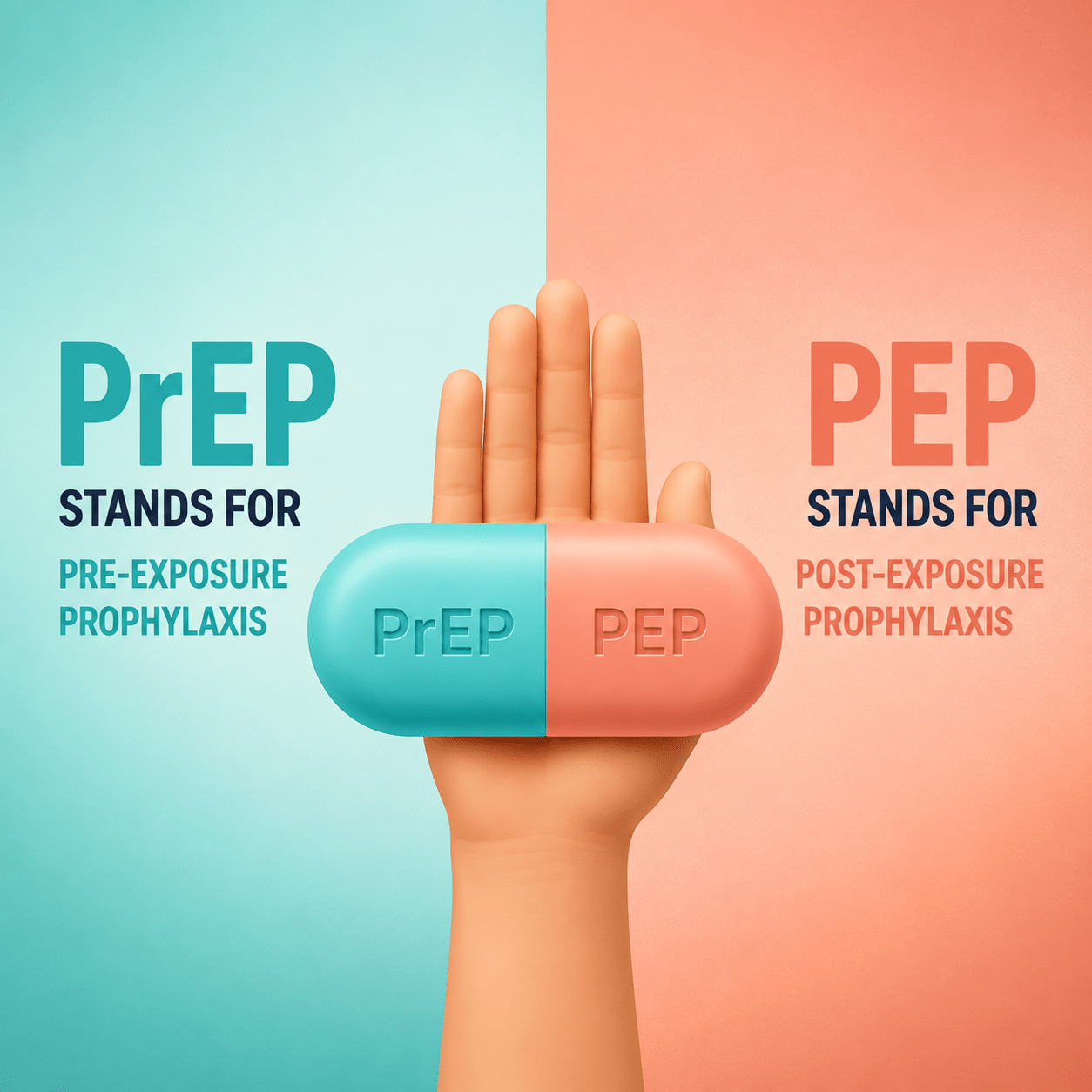
Both PrEP and PEP are medications used to help prevent HIV, but they are used at different times. PrEP is a planned approach to HIV prevention, while PEP is used following a potential exposure to HIV.
| PrEP | PEP | |
|---|---|---|
| Meaning | Pre-exposure prophylaxis | Post-exposure prophylaxis |
| When is it used? | Before potential HIV exposure | After potential HIV exposure |
| Purpose | Planned approach to HIV prevention | Short course following a potential exposure |
| Timing | Used as part of an ongoing prevention approach | Should be started as soon as possible and within 72 hours |
| Medical advice | A GP can discuss whether PrEP may be appropriate | Urgently consult your GP. If they are unavailable, check https://www.getpep.info/ to access PEP near you |
The choice between PrEP and PEP depends on your circumstances and whether potential HIV exposure has already occurred. A GP can discuss your options and provide appropriate advice.
What is PrEP?
PrEP (pre-exposure prophylaxis) is medication used to help prevent HIV in people who do not have HIV. It may be an option for anyone with an ongoing or anticipated risk of HIV exposure.
PrEP became available through the PBS in Australia in 2018, making it more affordable and accessible with a prescription.
There are different ways of taking PrEP. Some people take it every day, while for others it can be taken before and after anticipated sexual activity, known as on-demand PrEP. A GP can discuss which approach may be appropriate for you and explain how to take PrEP correctly.
Before starting PrEP, your GP will direct you to complete an HIV test, as well as STI testing and other relevant blood tests. Regular follow-up appointments and testing are a normal part of taking PrEP.
What is PEP?
PEP (post-exposure prophylaxis) is a short course of medication taken following a potential exposure to HIV.
Timing is important. PEP needs to be started as soon as possible and no later than 72 hours after a potential exposure. Treatment is generally taken for 28 days.
If you think you may need PEP, seek medical care as soon as possible rather than waiting for a routine appointment.
HIV prevention isn’t one-size-fits-all
PrEP and PEP are part of a broader range of HIV prevention options.
Condoms continue to play an important role and can also help prevent many other sexually transmitted infections (STIs).
You may also have heard of U=U (Undetectable = Untransmittable).
When a person living with HIV is taking effective treatment and maintains an undetectable viral load, they cannot sexually transmit HIV.
Different approaches may suit different people and circumstances. A GP can help you understand your options and make informed decisions about your sexual health.
Frequently Asked Questions
Does PrEP prevent other STIs?
No. PrEP helps prevent HIV but does not prevent other STIs. Regular STI testing remains an important part of looking after your sexual health.
Do I need testing before starting PrEP?
Yes. You’ll need an HIV test before starting PrEP and may also require STI testing and other blood tests. Your GP will discuss which tests are appropriate and arrange ongoing monitoring while you’re taking PrEP.
What if I've already been exposed to HIV?
If a potential exposure has already occurred, PEP may be appropriate. PEP must be started within 72 hours, and the sooner it is started, the better.
Doctors practising at Medical Hub @ RMIT can prescribe PEP. Because it is time-sensitive, please call our reception team on (03) 9999 2778 rather than booking online. Our team can direct you to a doctor who can assess your circumstances and prescribe PEP where appropriate.
If you can’t access an appointment within the required timeframe, call the Victorian PEP Phoneline on 1800 889 887 or visit the Get PEP website to find another PEP provider.
Can I talk to a GP about whether PrEP is right for me?
Yes. Doctors consulting at Medical Hub @ RMIT provide confidential sexual health consultations where you can discuss PrEP, HIV prevention and STI testing without judgement.
If you’re considering PrEP or would simply like to understand your HIV prevention options, you can book an appointment with a GP.
I've needed PEP before. Should I consider PrEP?
It may be worth discussing. If you’ve previously needed PEP or there is an ongoing possibility of HIV exposure, a GP can discuss whether PrEP may be an appropriate option for you.